IVF Treatment Complete Guide for Couples Trying to Conceive. For many couples, trying to conceive does not happen as easily as expected. When pregnancy is delayed, it often brings emotional stress, physical exhaustion, and many unanswered questions. In my years of clinical practice, I have met countless couples who quietly blame themselves for something that is not their fault.
It is important to understand this clearly:
infertility is a medical condition, not a personal failure.
With advancements in reproductive medicine and modern fertility treatment options, IVF treatment has helped millions of couples across the world become parents. This IVF Treatment Complete Guide for Couples Trying to Conceive is written to explain IVF treatment, the IVF process, and practical infertility solutions in a clear, honest, and practical way—so couples can make informed decisions with confidence.
IVF (In Vitro Fertilization) is an advanced fertility treatment in which fertilization takes place outside the body in a controlled laboratory environment.
In this IVF Treatment Complete Guide for Couples Trying to Conceive, IVF treatment involves:
Collecting eggs from the woman’s ovaries
Collecting sperm from the male partner
Performing fertilization in a specialized IVF laboratory
Transferring the healthiest embryo into the uterus
In simple terms, fertilization happens outside the body, while pregnancy develops naturally inside the womb through assisted reproductive technology (ART)
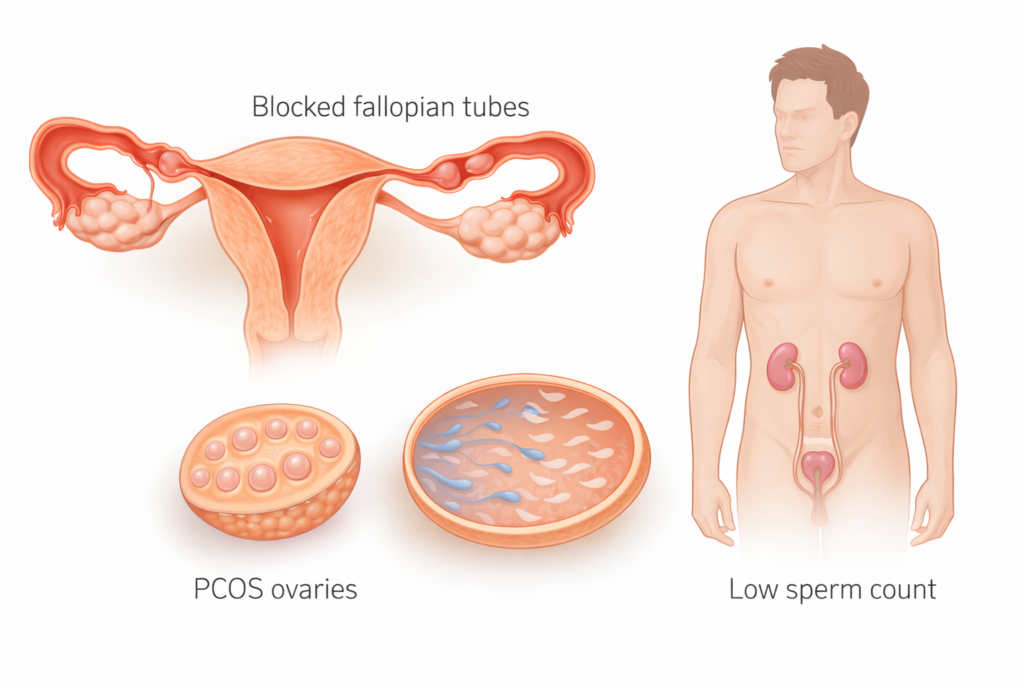
IVF treatment is recommended when natural conception is difficult or has not occurred despite adequate time and effort.
According to this IVF Treatment Complete Guide for Couples Trying to Conceive, IVF eligibility includes couples with:
Blocked fallopian tubes
Low sperm count or poor sperm motility
PCOS (Polycystic Ovary Syndrome)
Endometriosis
Unexplained infertility
Age above 35 years
Repeated IUI failure
Recurrent miscarriages
Doctor’s Insight: IVF is never advised casually. A complete fertility evaluation of both partners is essential before starting IVF treatment.
Understanding each stage of IVF treatment helps couples prepare physically and emotionally.
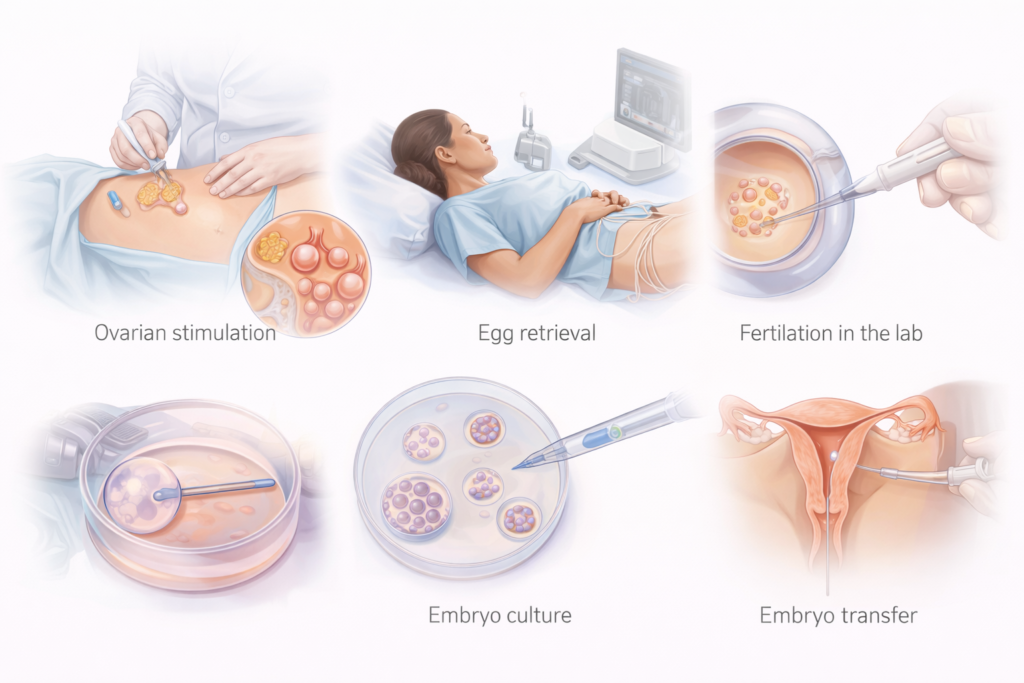
This IVF Treatment Complete Guide for Couples Trying to Conceive explains the IVF treatment process step by step, so couples clearly understand the IVF cycle timeline.
Before IVF treatment begins, fertility evaluation includes fertility tests before IVF such as hormone blood tests, ultrasound scans, semen analysis, and medical history review.
These tests help doctors create a personalized IVF treatment plan.
During IVF treatment, ovarian stimulation is done using fertility injections to help the ovaries produce multiple eggs in one cycle.
Regular scans ensure safe egg development and controlled response.
Egg retrieval, also called ovum pickup, is a short egg retrieval procedure performed under anesthesia.
Takes about 15–20 minutes
Usually painless
Same-day discharge
Most women experience quick IVF recovery.
On the day of egg retrieval, sperm is collected from the male partner.
Fertilization is performed using:
Conventional IVF, or
ICSI treatment (when sperm quality is low)
This step improves IVF success chances.
After fertilization, embryo development is monitored carefully for 3–5 days.
In this IVF Treatment Complete Guide for Couples Trying to Conceive, the healthiest embryo is selected, while others may be preserved through embryo freezing.
The embryo transfer process is simple and painless.
No anesthesia required
Takes only a few minutes
Supports successful IVF implantation
A beta hCG test or IVF pregnancy test is done 12–14 days after embryo transfer to confirm pregnancy.

Pain is one of the most common concerns regarding IVF treatment.
According to this IVF Treatment Complete Guide for Couples Trying to Conceive, is IVF painful is a frequent question. Injections may cause mild IVF discomfort, but egg retrieval is painless due to anesthesia, and embryo transfer feels similar to a routine scan.
Most women resume normal activities within 1–2 days.
IVF success rate depends on several medical and lifestyle factors.
This IVF Treatment Complete Guide for Couples Trying to Conceive explains how woman’s age, egg and sperm quality, uterine health, and overall lifestyle habits influence IVF success rates.
Average IVF success rates:
Below 35 years: 55–65%
35–40 years: 35–45%
Above 40 years: 20–30%
IVF treatment is a safe fertility procedure when performed by experienced specialists.
Possible IVF side effects include temporary bloating, mood changes, or breast tenderness. Serious IVF risks, such as ovarian hyperstimulation, are rare with proper monitoring.
IVF treatment cost depends on:
Medication requirements
Number of IVF cycles
Advanced procedures like ICSI or embryo freezing
This IVF Treatment Complete Guide for Couples Trying to Conceive advises couples to request transparent pricing and a written IVF treatment plan.
Doctors recommend lifestyle changes to improve IVF success, including:
Balanced fertility diet
Healthy body weight
Adequate sleep
Stress management
Avoiding smoking and alcohol
These habits help improve IVF outcomes naturally.
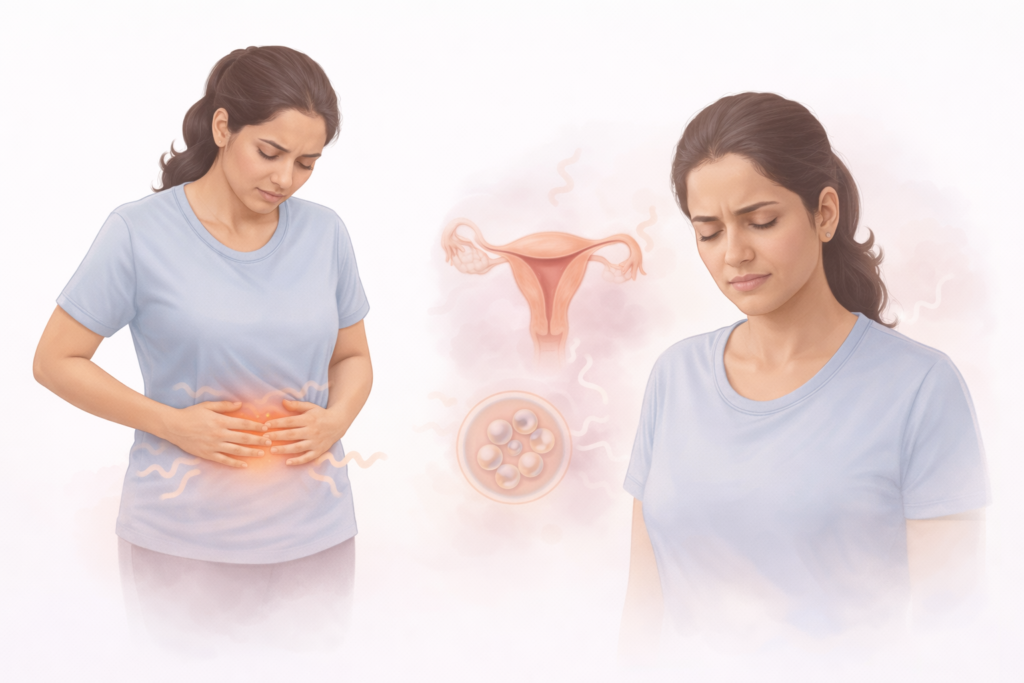
IVF treatment affects emotional health as much as physical health.
This IVF Treatment Complete Guide for Couples Trying to Conceive highlights the importance of emotional support during IVF, IVF stress management, and open communication between partners.
IVF treatment has helped countless couples achieve parenthood through advanced reproductive science, clinical experience, and compassionate fertility care. This IVF Treatment Complete Guide for Couples Trying to Conceive is intended to provide clarity, confidence, and realistic expectations.
Infertility is a medical condition, not a personal failure. With early fertility diagnosis, personalized IVF treatment planning, and strong emotional support, IVF treatment offers a safe and effective path to parenthood.contact now for treatment
Fill details & book via WhatsApp.