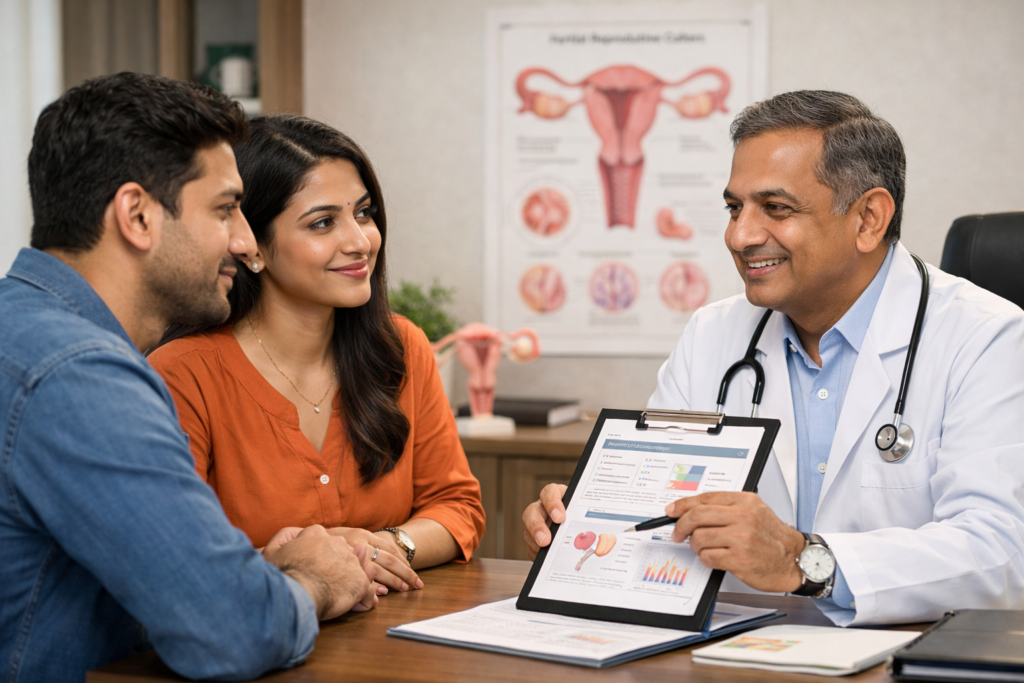
fertility tests for couples step by step.Trying for pregnancy and not seeing a positive result can feel emotionally exhausting for many couples. Sometimes couples blame themselves or feel anxious, but medically speaking infertility is not uncommon, and most fertility issues can be identified early. The best approach is to evaluate both partners together, because fertility depends on the health of the male and female reproductive systems.
This article explains Fertility Tests for Couples Step by Step in a clear and patient-friendly manner, just like a doctor would explain during consultation. You will understand which tests are done for the female partner and male partner, why each test matters, when it should be done, and what the next steps are after reports come.
Many couples assume fertility problems are only due to the woman. In reality:
Male factor infertility contributes to ~40–50% cases
Female factor infertility contributes to ~40–50% cases
In some couples, both partners have contributing factors
That’s why doctors always recommend fertility evaluation as a couple, not individually.
The goal of fertility testing is to check 3 main areas:
Ovulation (Is the egg being released?)
Sperm health (Count, movement, shape)
Fallopian tube & uterus (Are tubes open? Is uterus healthy for implantation?)
Before lab tests, the doctor takes detailed history such as:
Period cycle regularity
Thyroid, PCOS symptoms
Previous pregnancy / miscarriage
Weight changes, acne, hair growth
Pelvic pain (endometriosis suspicion)
Smoking/alcohol
Past infections (mumps, STDs)
Heat exposure, tight underwear, laptop use
History of hernia surgery or testicular surgery
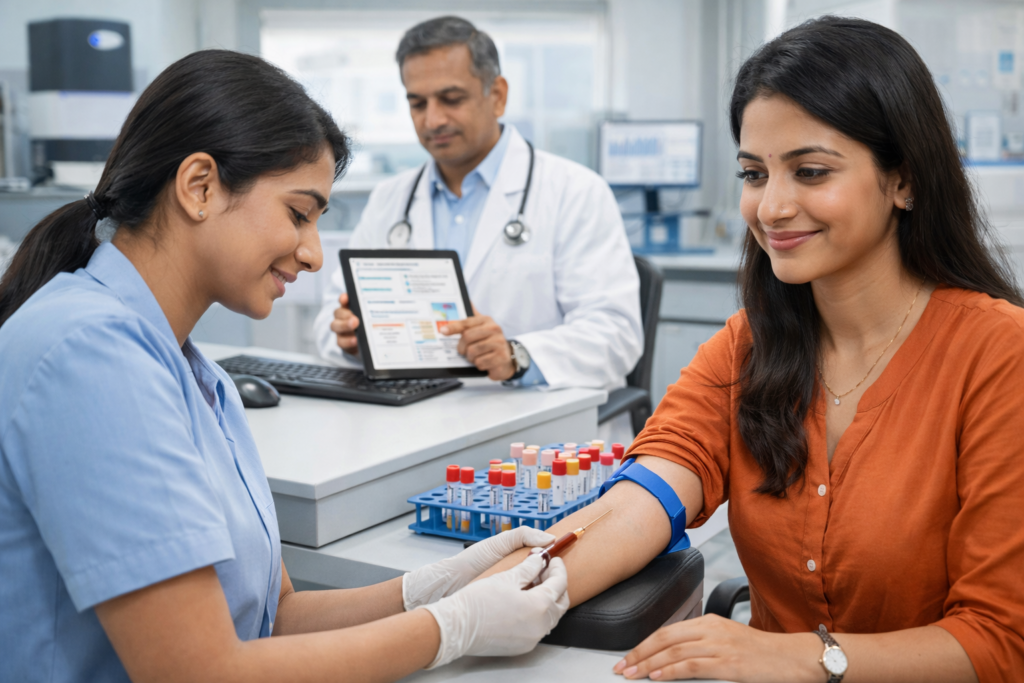
These tests evaluate hormones and general health.
Shows ovarian reserve (egg quantity)
Done any day of cycle
Why important: Helps plan fertility treatment (natural/IUI/IVF)
Done on day 2/3 of periods
Checks egg stimulation ability
High prolactin can block ovulation
Thyroid imbalance is a very common cause of infertility
Checks for insulin resistance & diabetes (important in PCOS)
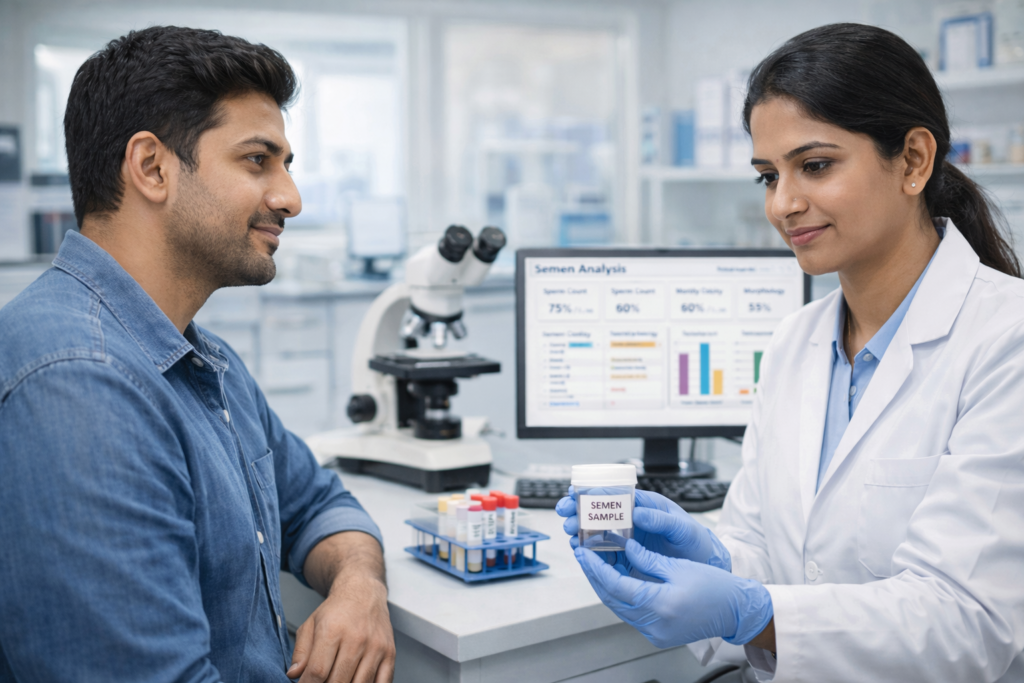
This is the first and most important fertility test for men.
Sperm count
Sperm motility (movement)
Sperm morphology (shape)
Semen volume and infection
This is the simplest and most informative test in the full infertility workup.
Preparation:
2–5 days abstinence
Avoid fever/viral illness for 2–3 months before (it can reduce sperm quality)
If semen analysis is abnormal, doctor may repeat after 2–3 weeks for confirmation.
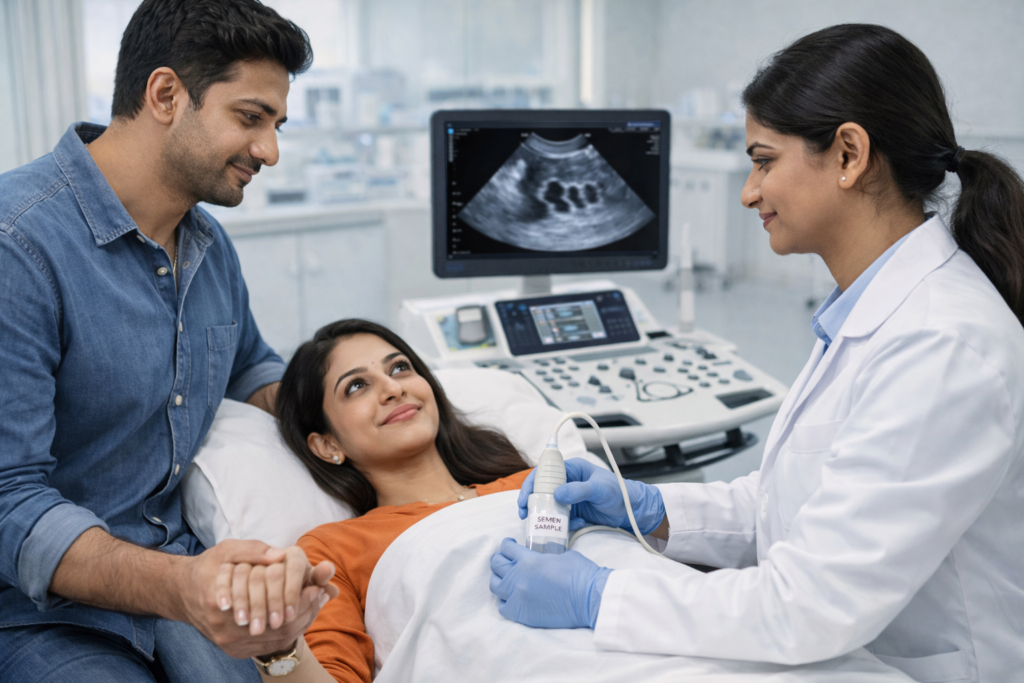
.
Used to check:
Uterus shape
Endometrial lining thickness
Ovaries (PCOS / cysts)
Fibroids or polyps
This is a major part of fertility tests for couples step by step.
It checks:
Egg growth
Ovulation timing
Best fertile window
Why it matters:
Some women have periods but do not ovulate properly.
Confirms ovulation
Best for regular 28–30 day cycles
(Doctor may adjust day based on cycle length)
Detects LH surge
Helps in timed intercourse or IUI planning
Confirms ovulation
Best for regular 28–30 day cycles
(Doctor may adjust day based on cycle length)
Detects LH surge
Helps in timed intercourse or IUI planning
Even if eggs and sperm are normal, pregnancy cannot happen if tubes are blocked.
X-ray dye test done after periods (before ovulation)
Shows whether tubes are open
Recommended especially when:
Previous infection
Previous pelvic surgery
History of tuberculosis
Endometriosis suspicion
Sonosalpingography (SSG)
Laparoscopy (if needed)
If tube test is normal, next check is uterus — whether embryo can implant.
.TVS ultrasound
.Saline infusion .sonography (SIS)
Hysteroscopy (gold standard)
These tests detect:
Polyps
Fibroids
Septum in uterus
Scar tissue
Adhesions
Not every couple needs these. Doctors recommend them in specific cases like repeated miscarriage, failed IVF, or unexplained infertility.
Testosterone, DHEAS (female androgen hormones)
TORCH / Infection screening
Genetic tests (karyotyping)
Thrombophilia profile (recurrent miscarriage)
Sperm DNA fragmentation test
Testicular ultrasound (if severe male infertility)
Most couples can complete fertility evaluation within:
2–4 weeks
Semen analysis: 1 day
Female hormone tests: 1 cycle
Follicular monitoring: 10–15 days
HSG test: after periods
Doctors recommend starting fertility tests for couples step by step when:
Age <35 and trying for 1 year
Age ≥35 and trying for 6 months
Periods are irregular / no ovulation
History of miscarriage
Male partner has known health issues
PCOS, thyroid problems, endometriosis suspected
Based on results, the doctor may suggest:
Timed intercourse
Lifestyle changes
Ovulation tracking
Ovulation induction tablets
IUI (Intrauterine insemination)
IVF / ICSI
The best part is: doing tests early avoids delay and improves pregnancy chance.
Infertility is common, and couples should never feel embarrassed or discouraged about seeking fertility support. The most important step is early diagnosis with the correct testing sequence. When couples follow Fertility Tests for Couples Step by Step without delay, it reduces emotional stress, avoids unnecessary treatments, and improves pregnancy success. With proper guidance, many couples can achieve pregnancy naturally or with fertility treatments like IUI or IVF. The right tests at the right time make the journey easier, clearer, and more hopeful.for fertlity treatments contact now
Fill details & book via WhatsApp.